Webinaires de l'industrie
Ateliers techniques et analyses approfondies avec des experts des grandes entreprises de neurotechnologie partout dans le monde.
Série de webinaires NeuroTechX

NeuroTechX Webinar: EEG Notebooks
An Accessible, Affordable, and Scalable Cognitive Neuroscience Research Platform Abstract: The rise of low-cost consumer EEG devices has made it easier than ever for students and enthusiasts to access neural data. However, pay-for-access licensing and a lack of beginner-friendly tools has lead to frustration amongst potential newcomers and restricted the use of these devices as research tools to those with programming experience. EEG Notebooks aims to address this problem by providing an accessible, reliable, and open source framework for performing EEG experiments with Python and Jupyter Notebooks. The project is being debuted this year at a number of high schools in the Toronto and New York areas, where it is being used as a platform to provide hands-on neuroscience, psychology, and scientific computing education. With the support, contributions, and extensions from the NeuroTechX and the broader neuroscience research and education communities, this project hopes to develop much-needed bridges between the research, education, and technology sectors. About the presenter Dano Morrison: Dano holds MSc. in Neuroscience from the University of Toronto and has 2 years of experience building applications for desktop, mobile, and web. After leaving the lab, Dano decided to shift his focus to the emerging neurotechnology industry and built EEG 101, an interactive neuroscience educational tool for Android that makes use of real-time EEG data. Documentation: http://eeg-notebooks.readthedocs.io/en/latest/ GitHub: https://github.com/NeuroTechX/eeg-notebooks Sign up for the NeuroTechX Newsletter: http://bit.ly/ntx-digest
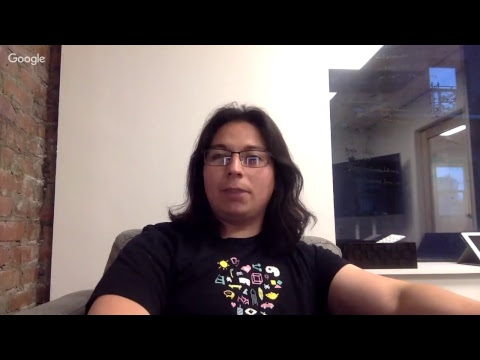
NeuroTechX Webinar: BCI/EEG in VR/AR
Virtual and Augmented Reality is just getting started and some companies are already trying to embed EEG sensors in these VR/AR headsets. Join us for a discussion with InteraXon and Neurable on the current state of EEG in VR and the potential of the field. InteraXon: http://www.choosemuse.com/ Neurable: http://neurable.com/ Hosts: Yannick Roy & Micah Blumberg

NeuroTechX Webinar#3 - BCI UX: User Focused Paradigms for Enhancing Brain-Computer Interfaces
Title: BCI UX: Evaluating user focused paradigms for the purpose of enhancing Brain-Computer Interaction Abstract: The webinar will cover two research studies on user focused paradigms, step by step, from paradigm design to lab experiments, and the analysis of the research outcomes based on advanced and complex signal processing and machine learning techniques), towards the transfer to real-life applications. Specifically, the research focuses on improving the BCI interaction by designing the BCI paradigms according to users' needs and desires, making it easier and more natural for them to interact with the future BCI system. In particular, the often monotonous tasks of BCI systems are replaced with more engaging activities and the context of used mental state detection is investigated instead of the strict activities requested by usual BCIs. As mental tasks, cognitive processes and motor imagery tasks are investigated in the two scenarios. Speaker: Irina Emilia Nicolae Bio: Irina Emilia Nicolae is a researcher of the Neurotechnology Group, Technische Universität Berlin. She is following her joint PhD at Technische Universität Berlin and Politehnica University of Bucharest in the field of signal processing and Brain-Computer Interfaces (BCI). Her research focuses on cognitive processes and motor imagery, targeting user focused paradigms and user state monitoring. Sign up for the NeuroTechX Newsletter: http://bit.ly/ntx-digest Readings and References: • the stimuli images in the cognition study were designed by Freepik.com • publications on efficient motor imagery tasks: - http://dx.doi.org/10.1109/EMBC.2016.7592061 - http://dx.doi.org/10.1109/ECAI.2014.7090216 • publications on cognitive processing levels - https://doi.org/10.3389/fnins.2017.00548 - https://doi.org/10.3389/10.1007/978-3-319-24917-9_13 - https://doi.org/10.3217/978-3-85125-467-9-186 and the DATA: https://doi.org/10.14279/depositonce-6173 Other References (for CSP, SSD, ERD, ERP, ICA P300, workload, task difficulty, classification, mental state, cognition, ...) here: https://www.frontiersin.org/articles/10.3389/fnins.2017.00548/full#h11 https://ieeexplore.ieee.org/document/7592061/references#references

NeuroTechX Webinar #4: NeuroEthics with the International NeuroEthics Society
Webinar Starts at: 4:11 Abstract: During this webinar we'll discuss NeuroEthics. Important questions will be raised and answered. From Accessibility to Inclusivity to Privacy we'll leave no stone unturned while exploring the future we want to build with neurotechnology.

NeuroTechX Webinar #5: Whole Brain Simulation
This Webinar will focus on Whole Brain Simulation(WBE): Developing WBE technology would provide immense benefits across neuroscience, biomedicine, artificial intelligence, and robotics. At this time, constructing a simulated human brain lacks feasibility due to limited experimental data and limited computational resources. However, progress towards this goal might be acceleratedby working towards an intermediate objective, namely insect brain emulation (IBE). More specifically, this would entail creating biologically realistic simulations of entire insect nervous systems along with more approximate simulations of non-neuronal insect physiology to make “virtual insects.” This is realistically achievable within the next 25-50 years. By demonstrating that WBE is possible via IBE, simulating the human brain will no longer be viewed as too radically ambitious to deserve substantial funding and resources. This shift may facilitate a large-scale organized push towards human WBE, making the goal potentially reachable during the 21st century. By implementing IBE, large-scale scientific infrastructure may shift towards developing more WBEs and move in the direction of comprehensively understanding neural computation. ********************************** Speaker Bio: Logan Thrasher Collins is a futurist, neuroengineer, synthetic biologist, and sci-fi poet. When he was 16 he invented a de novo antimicrobial peptide called OpaL and has continued doing scientific research ever since. His antibacterial research has been published in the journal ACS Biochemistry. Logan is currently developing a method for rapid, high-resolution mapping of brain tissue that involves nanotechnology-based contrast agents and X-ray microscopy. His accomplishments have earned him recognition at venues like TEDxMileHigh, the DaVinci Institute, the Intel International Science and Engineering Fair, the Beckman Symposium, the Stockholm International Youth Science Seminar, and the Envision Conference. Logan is an active futurist writer and speaker. He has championed the concept of “rational romanticism,” which promotes merging scientifically literate and emotionally intelligent thinking towards building a brighter future. He has also published sci-fi poetry that explores ideas about the future. Logan applies his scientific and his artistic skills towards making the future the best that it can be. *********************************** Learn more about NeuroTechX → https://neurotechx.com/ Check out previous webinars → http://bit.ly/2EtlyBY Buy our Merch! → http://neurotechx.com/store/ Sign up to our newsletter → http://eepurl.com/dCO7ps ***********************************

NeuroTechX Webinar #6: Closed-loop optical and electrical neural interfacing by Steve M. Potter
Webinar Starts at 4:50 Link to the Slides: https://b.gatech.edu/2R8rPov Abstract: This webinar will introduce you to the future of neural interfacing: closed-loop optical interfaces. I will explain optogenetics and how it can be used to control neural activity with more specificity and precision than electrical interfaces can. In my lab at Georgia Tech, we developed a number of open-source solutions for neural interfaces, including MEAbench, NeuroRighter, and most recently the OptoClamp. We pioneered closed-loop interfaces to study learning and memory in cortical networks grown in vitro. Some of these comprised hybrid systems in which living neurons were embodied in robots or simulated animals. By using closed-loop feedback, network dynamics, learning and neural plasticity can be studied at a variety of time scales both in vitro and in vivo. We used closed-loop optical and electrical neural interfaces to control seizure activity and study homeostatic plasticity associated with epilepsy, chronic pain, tinnitus, and other deafferentation syndromes. ********************************** Speaker Bio: Steve M. Potter and his research group spent the past two decades developing new ways to study neural dynamics and plasticity at the networks-level using cortical networks of neurons and glia growing in Petri dishes instrumented with arrays of electrodes. They created the field of Embodied Cultured Networks, a new hybrid lab animal whose brain sits on the microscope stage while its robotic body behaves. Potter is a semi-retired Adjunct Associate Professor in the Department of Biomedical Engineering at the Georgia Institute of Technology and Emory University School of Medicine. From 1993-2002 he worked as Research Faculty at Caltech in the labs of Prof. Scott Fraser and Prof. Jerry Pine, building a 2-photon microscope, a high-speed neural activity imaging camera, and closed-loop multi-electrode array neural culture systems. He is currently a freelance consultant, writer, teacher and maker in Dundalk, Ireland. All of his research publications are available at http://potterlab.gatech.edu *********************************** Learn more about NeuroTechX → https://neurotechx.com/ Check out previous webinars → http://bit.ly/2EtlyBY Buy our Merch! → http://neurotechx.com/store/ Sign up to our newsletter → http://eepurl.com/dCO7ps ***********************************

NeuroTechX Webinar#7: BCI's for Communication. Presented by Florencia Garro
Webinar Starts at 3:33 Communication is a basic human need, and currently millions of people around the world are non-verbal, due to various disorders and pathologies. Invasive and non-invasive brain computer interfaces (BCIs) techniques have been explored in the past few decades, to restore autonomous and real-time communication. These assistive BCIs are designed to enable severely disabled patients to interact with the environment, as an augmentative and alternative communication system. But there isn't an efficient end-user product with this technology yet, showing that there is a lot of work to do in this field, to fulfill basic requirements such as efficacy, usability, and stability. In this webinar we will do an overview of the state of art of BCIs for rehabilitation and the current technology available, considering the use of BCIs for communication in severely disabled patients. We then will discuss the advantages and shortfalls of these systems during their design and validation, point out their main issues and limitations and comment on the future perspectives in the field. ********************************** Speaker Bio: Florencia Garro got her biomedical engineering degree from National University of Córdoba, in Argentina. She worked as a neurological technician in a hospital for a short period of time, and then for three years at Promedon as a R&D analyst. Promedon is a medical device company that designs and manufactures urogynecological implants. She started to work with BCI during college and did an internship in a neuroscience lab where she collaborated in the design of an EEG helmet. She then collaborated in a motor-imagery based BCI development for a thesis. Recently, she started to work in OTTAA last year, where she's coordinating the R&D area. She is also currently doing Master in Neuroscience in Favaloro University. *********************************** Learn more about NeuroTechX → https://neurotechx.com/ Check out previous webinars → http://bit.ly/2EtlyBY Buy our Merch! → http://neurotechx.com/store/ Sign up to our newsletter → http://eepurl.com/dCO7ps ***********************************

NeuroTechX Webinar#8- Spectra: Open Source Biomedical Imaging Presented by Jean Rintoul
Webinar Starts at 2:50 Biomedical Imaging has previously been expensive and near impossible to hack and experiment with. If more people experimented and understood how imaging works we could move it forward much faster and make these transformative technologies available to everyone. In this podcast we'll talk about Spectra: a tiny 2" device that uses safe levels of AC current to recreate an image of any conductive material such as your lungs, arm or head, using the same tomographic reconstruction technique as a cat scan. The implications of having a cheap imaging tool are huge across developing countries, all the way to neuroimaging and we'll discuss some of these transformative applications. ********************************** Jean Rintoul hopes to improve the pace of innovation in healthcare by pushing forward a health technology commons. Previous experiences include bringing numerous consumer electronic biosensor products to market from the Emotiv BCI to the Basis watch and Kiddo biosensor watch, and being published for her work in Cognitive Neuroscience and videogame training in Nature. *********************************** Learn more about NeuroTechX → https://neurotechx.com/ Check out previous webinars → http://bit.ly/2EtlyBY Buy our Merch! → http://neurotechx.com/store/ Sign up to our newsletter → http://eepurl.com/dCO7ps ***********************************

NeuroTechX Webinar#9: New treatments for Depression. Presented by Dr. Helen Mayberg
In collaboration with the International Neuroethics Society Webinar starts at 4:39 Deep brain stimulation (DBS) offers hope for people with severe, chronic depression who do not respond to conventional treatment. Although there has been much progress in the development of DBS, there have been some setbacks and important considerations remain for those working in this field around the benefit-risk balance. Research, therefore, must continue. Professor Helen Mayberg will talk about how DBS got started and why, and the push for commercialization by industry. She will discuss the how the needs of the patient and the risks of no treatment options are balanced by the need for care in design and use of new technologies. ********************************** Speaker Bio: Helen Mayberg, MD is Professor of Neurology, Neurosurgery, Psychiatry and Neuroscience, and the Mount Sinai Professor in Neurotherapeutics at the Icahn School of Medicine. Known for studies of brain circuits in depression and for her pioneering deep brain stimulation research, Dr. Mayberg moved in 2018 from Emory University in Atlanta to Mount Sinai in New York as the Founding Director of the Center for Advanced Circuit Therapeutics. Over her career in the United States and Canada, her teams have worked to combine cutting-edge imaging strategies, quantitative behavioral metrics, and rigorous clinical trials to define brain-based biomarkers that will optimize treatment selection for individual patients with depression. Extending this theme, her new Center at Mt Sinai will provide an integrated platform to catalyze collaborative translational research, bringing together clinicians from neurology, neurosurgery, psychiatry and psychology and experts from neuroscience, imaging, engineering, and computational modeling within a unique, shared ecosystem and a common mission to advance precision surgical treatments for patients with complex neuropsychiatric disorders. Dr. Mayberg trained in Neurology at Columbia's Neurological Institute in New York, followed by a research fellowship in nuclear medicine at Johns Hopkins. She is a member of the National Academy of Medicine, The American Academy of Arts and Sciences and the National Academy of Inventors, among other honors, and participates in a wide variety of scientific and advisory activities across multiple fields in neuroscience. *********************************** Learn more about NeuroTechX → https://neurotechx.com/ Check out previous webinars → http://bit.ly/2EtlyBY Buy our Merch! → http://neurotechx.com/store/ Sign up to our newsletter → http://eepurl.com/dCO7ps ***********************************